
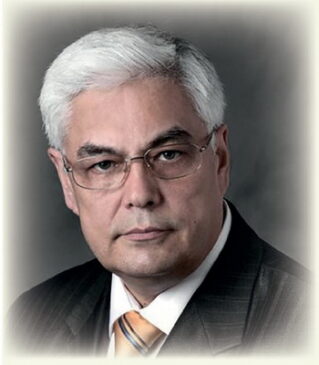
 Interview with the Vice President of the National Academy of Sciences of Ukraine
The topic of conversation with Academician of the National Academy of Sciences of Ukraine, Vice President of the NAS of Ukraine, Serhii Ivanovych Pyrozhkov was supposed to be quite specific, directly related to his activities in leading scientific institutions, to which he dedicated many years of his life — matters of national security of Ukraine, international, demographic and humanitarian policies of the state. Basically — the military doctrine, the state economy and related problematic issues that have been on the agenda in Ukraine for many years. But almost unexpectedly, we began to talk about the Ukrainian language, in particular about the new orthography, to the introduction of which Serhii Ivanovych, as it turns out, is directly related, although his education, scientific regalia and various positions that he held have nothing to do with philology. And in his office, among the many interesting books, one can see the new edition of Ukrainian orthography. It is also, as Serhii Ivanovych explains, can be considered a kind of component of our national security.
— As for the new edition of Ukrainian orthography (Serhii Ivanovych takes a new orthography from the bookcase and flips through the pages). Its preparation took almost twenty-seven (!) years. There were various variants of orthography proposed. In the 1990s, when the Deputy Prime Minister of our government was Mykola Hryhorovych Zhulynskyi — Director of the Taras Shevchenko Institute of the Ukrainian Literature, who was responsible for the humanitarian sphere, the government created a special commission for orthography. It prepared its variant of orthography. With its submission to public discussion, a great debate began, both objections and protests were heard… As a result, the government had to make a decision: not to introduce a new version of the orthography.
Almost 10 years have passed. Ivan Fedorovych Kuras was then the Vice President of our National Academy of Sciences, and Vasyl Hryhorovych Kremin was the Minister of Education. That’s when the Cabinet of Ministers created an updated national commission on the preparation of a new version of the Ukrainian orthography from representatives of the National Academy of Sciences and the Ministry of Education of Ukraine. They prepared their own version of the orthography, which, according to the provision, also had to be discussed publicly. And again, what a discussion began!.. We had to make a decision again: not to publish!

— To continue the work or to stop it altogether?
— Not exactly… In 2015, the government returned to this issue and created the Ukrainian National Commission on orthography, where I was appointed its co-head, together with the Deputy Minister of Education and Science of Ukraine Vitalii Strykha (writer). And our activity began with the fact that a working group of authoritative experts was created at the orthography commission under the leadership of Svitlana Yakivna Yermolenko (now she is an Academician of the National Academy of Sciences of Ukraine, works at the Institute of the Ukrainian Language of our Academy). Linguists, including representatives of our leading universities, were involved in its work. The theses they developed were discussed by members of the aforementioned commission, which either approved or rejected the proposed versions of individual orthography sections. This work was on for three years.
— The matter extremely serious for Ukraine and responsible for the specialists involved. I remember that the discussion of the new orthography practically took place at all levels, up to the school teacher.
— Upon the completion of the work, we held a joint meeting of the Presidium of the National Academy of Sciences with the Collegium of the Ministry of Education and Science and analyzed this version. At the same time, proposals for a wide discussion were published on our websites for a month and a half. We received at least 600 comments, each of which was necessarily worked out in detail in the orthography commission.
— I guess it was difficult. After all, at that time such a topic, as far as I remember, was made political. Not least because it was also about the use of Russian as the state language, although it meant nothing more than orthography.
— Indeed, a lot had happened, even unexpected things. For example, when everything had been approved, and the work had to be submitted to the Cabinet of Ministers for final approval, Director of the Institute of the Ukrainian Language Pavlo Yukhymovych Hrytsenko addressed me with the words: “The orthography is good for nothing!” But he was also a member of the orthography commission! Then I suggest that he put all his comments in the printed version — to each page, to each paragraph. And when a week later he brought his amendments, it turned out that we had already considered 99 % of these comments in the commission and they were rejected.
Four years later, on November 9, 2022, at a meeting of the Presidium of the National Academy of Sciences of Ukraine dedicated to the Day of the Ukrainian Language, we considered the development of the Ukrainian language as the state language. The report was made by Director of the Oleksandr Potebnia Institute of Linguistics Bohdan Azhniuk and the aforementioned Pavlo Hrytsenko, who again began to deny certain provisions of the orthography. Once again I had to explain that at the moment there is no point in raising this topic again, since it has already gone beyond our powers.
— What do you mean: politics or the so called technical work?
— What we had already done had already been approved by a joint decision of the Collegium of the Ministry of Education and Science of Ukraine and the Presidium of the NAS of Ukraine, which was approved by the Resolution of the Cabinet of Ministers of Ukraine of May 22, 2019 No. 437. And in order to review what had been worked out again, it was necessary to start all over again, with a government’s resolution, with the approval of the composition of the relevant commission, etc. I said that it was advisable to return to such an issue 10 years later, when there would be practical proposals after using the updated version of the current orthography. They agreed with me. So much on the issue of the updated version of the Ukrainian orthography…

— In recent years, the National Academy of Sciences has published a number of extremely relevant national reports under your leadership and with your direct participation. (“Ukraine’s Civilizational Choice”, 2018; “Ukraine: the Path To the Consolidation of Society”, 2019; “Ukraine’s Euro-Atlantic Vector”, 2020; “Ukraine As a Civilizational Subject of History and Modernity”, 2021; “National Resilience of Ukraine: Hybrid Threats Challenge Response and Prevention Strategy”, 2022). Was it easier to work on them than on Ukrainian orthography? What was their goal, purpose, and how do you assess the consequences of such work?
— According to these reports of the NAS of Ukraine, one can see, among other things, the position of scientists in certain topical issues of the development of our country. I was appointed to the position I hold in 2015, after working in the Republic of Moldova for almost 8 years as Ambassador Extraordinary and Plenipotentiary of Ukraine. At that moment, I was already thinking of retiring in order to calmly work with my archives. But when Borys Yevhenovych Paton invited me to work in the Presidium of the National Academy of Sciences as Vice President, I could not refuse. Especially as I owed him a lot as a scientist and as a person.
— In such an office, the chief’s request is perceived as an order, isn’t it? At least you have considerable experience of scientific activity…
— Exactly (smiles). I was engaged in science in such an institution since 1976. Having defended my dissertation, I worked as a researcher in the Department of Demography at the Institute of Economics of the National Academy of Sciences of Ukraine. Once a situation arose when it was necessary to form a department of economics at the Academy, and I was appointed to the post of scientific secretary of this newly formed department. Later I was appointed scientific secretary of the section of social sciences and humanities.
After some time, I received an invitation from Moscow to the post of deputy director of the newly created Institute of Population of the USSR’s Academy of Sciences. To tell the truth, it didn’t quite suit me, because I was going to do science and prepare a doctoral work on demography, because it interested me the most. And despite the received an offer signed by a respected person, Borys Yevhenovych Paton advised me to prepare a doctoral dissertation and not to move to Moscow. It took six months to complete the dissertation. I was very much interested in demographic problems. I defended my dissertation in the same Moscow, because only there at that time there were relevant special councils for the defense of dissertations in the specialty “Demography”. It was in 1991, when the USSR collapsed, and I decided not to stay there. So I managed to fulfill Borys Paton’s instructions to write a scientific work and defend it, but to live and work in Ukraine.
After my return from Moldova, where I had been a Ukrainian Ambassador for a long time, he again invited me to join him, offering a job at the Academy of Sciences. I soon became its Vice President. At that time, we were preparing scientific works in order to mobilize our Ukrainian scientific potential to study the most pressing and important problems for the state. Our 38 economic, historical and philosophical scientific institutions were quite powerful. Like those that dealt with language and literature, which we just mentioned.
— As I see it, there was an urgent need for this. What problems were the most relevant then?
— The first work under my leadership was devoted to Ukraine’s civilizational choice. We needed to finally determine the direction of development of our state and society. That is, where should we go: East or West? And to confirm with solid conclusions — what Ukraine is more inclined to, what civilizational community is closest to it in spirit. We prepared the first such report in 2016 — “Ukraine’s Civilizational Choice”, where the strategic direction of our state’s development was justified — the Euro-Atlantic one.
— Was this direction for Ukraine first proposed, so to speak, from your submission?
— No, this had been done before, but it was we who created the serious basis for such a choice. We had to point out many aspects of the development of the state, including taking into account the historical ways of forming Ukrainian statehood…
— …including those related to the native, state language, as we mentioned at the beginning.
— Then there were published articles by Putin, also on such urgent problems. Later, in his speeches, he began to assert that there had never been a Ukrainian state at all, that these were only echoes of the certain imperial activities… Subsequently, we published another National Report: “Ukraine As a Civilizational Subject of History and Modernity”. In this work, we for the first time presented 12 geographical maps of the formation of the territory of modern Ukraine, starting from the period of Kyivan Rus of the 10th century. There, for example, there is a map regarding the 12th century, when its greatest heyday was, before the Tatar-Mongol invasion, when the attackers captured Kyiv, and Kyivan Rus was divided into the Galician-Volhynian Principality and the Grand Duchy of Chernihiv. The Russian Empire completely took possession of the territory of Ukraine after Catherine II liquidated the Cossacks and the Hetmanate, and some of Ukrainian lands were under the control of the Polish-Lithuanian Commonwealth, as the then Belarusian lands were ceded to Lithuania. On these maps one can see the Ukrainian lands, which later became part of Austria-Hungary, the same Poland, etc. And on the last map is the territory of modern Ukraine, which today the Russians are trying to redraw militarily and present as the originally Russian lands.
— Because the Ukrainian state does not suit many in the Russian Federation.
—Yes, this can be observed now. When the unprecedented occupation of the Autonomous Republic of Crimea and certain territories of the Donbas by the Russians began in 2014, we prepared reports on the strategy for responding to the challenges and preventing hybrid threats to Ukraine, on the Euro-Atlantic vector of Ukraine (when in our Constitution we decided on plans for joining NATO and the EU). These reports dealt not only with the directions of such state development, but also each time attention was paid to public opinion on such issues, to the results of surveys of our citizens. That is, thorough information was provided on how the ideas of European integration are perceived in our society. Our sociologists conduct such surveys on each of these issues. We must bear in mind the attitude of the society to such a state policy! Because the real power is the one that society supports. The last of these reports was “National Resilience of Ukraine: Hybrid Threats Challenge Response and Prevention Strategy”. Its preparation began in 2021, but we reported it to the Presidium of the of the National Academy of Sciences in April 2022. Even then, I understood that the report would be perceived in view of the events not of 2021, but of a full-scale attack on Ukraine on February 24, 2022. So, for the report, we had to prepare two appendixes that were prepared by lawyers — H. A. Mamedov (ex-Deputy Prosecutor General of Ukraine), and our lawyers, who even held an international round table for this purpose, where they decided how to bring Russian attackers to justice. In other words, we actualized the problems that Ukraine faces today, and for which the Russian aggressor should be responsible.
— Where can I get and read this relevant work?
— There are not many copies, because there are not enough funds for printing due to reduced funding for such activities. But it is presented on the website of the National Academy of Sciences of Ukraine [1]. Our team is already preparing the next report, and I hope there will be funds for its publication.
— Well, you have prepared and published the work. Will it be used by those who are supposed to use it?
— We send reports to the “very top”, where state policy is formed — to the Office of the President, the Government, to our Parliament. From there, feedback comes with messages that our work is used, it is appropriate and useful. But after that how and what is done, is not the question to us. You can judge by foreign policy events and the state of affairs within the state.

— Then I will ask: do you think we correctly perceive the role of NATO as a guarantor?
— The fact is that the question of our relations with NATO arose long before today. In 2001, the National Security and Defense Council of Ukraine adopted a strategy for such relations, which was not widely published. The President of Ukraine at that time was Leonid Kuchma, the Secretary of the National Security and Defense Council was Yevhen Marchuk, whose Deputy I was at that time. In fact, we wrote the Strategy adopted by the National Security and Defense Council. And it stated that the ultimate goal of the strategy is Ukraine’s accession to NATO. At that time, I was also a co-chair of the NATO-Ukraine Joint Working Group on Defence Reform, and together with foreign colleagues we held joint meetings. In fact, we began to establish active cooperation: we prepared a list of issues for such cooperation, defined standards for cooperation in the military sphere, including security agencies. In my opinion, cooperation was quite active at that time and they (NATO) perceived us positively. At least until Yanukovych became President and turned the process in the opposite direction. It was when, as you remember, Medvedchuk began to argue that we do not need NATO. The very mention of Ukraine’s cooperation with NATO was removed from the National Security Strategy.
— You see, when NATO began to be created in Europe in 1946, one of the reasons was the need to take control of the armies of European countries, so that again one of them would not have an unreasonable or subjective desire to attack and thus restart the war in Europe. That is, they sought to settle differences between states in a diplomatic way, not militarily. So Europe sought to prevent the troubles that World War II brought… And we often say that NATO is a shield that will protect against attack by an invader.
— But there is Article 5, according to which, in fact, NATO protects all its members. And in small European countries they are well aware of how to prevent an attack on themselves from unreliable neighbors. For such countries, such membership is a lifeline. NATO was formed after World War II as a collective structure to counter a possible attack by the Soviet Union, which later created what was called the Warsaw Pact. Finally, we believe that our reports answered the difficult questions that our state faced at that time. We, as scientists, began to work on the topic of civilizational choice, then we wrote a report on the consolidation of the Ukrainian society, because we believed that in order to integrate into the European community, it is necessary that we all are “for”. At least the vast majority of the Ukrainian population.
— At present, when the Russian-Ukrainian war began, such a majority is indisputable.
— Here it is appropriate to recall the events when Yanukovych, Azarov, Medvedchuk came to power. They also divided the Ukraine into parts — Eastern, Western, etc., provoking an internal confrontation in the country. Today I believe that it was the implementation of instructions from Moscow. In particular, they denied the expediency of NATO’s expansion near the borders of the Russian Federation, which Putin later officially began to talk about, who, in fact, could not accept the collapse of the Soviet Union, of which Russia could not become a full-fledged successor. At first, they abandoned the imperial ambitions of the Soviet Union. After all, the empire differs from the nation-state in that, in addition to national ones, it has interests concerning other states and territories that are located outside the national territory. Over time, the Soviet Union annexed the countries of Eastern Europe, essentially pursuing imperial policy. And when it collapsed, the Warsaw Pact was gone, and Russia declared itself the successor of the USSR. Is it possible when Ukraine has withdrawn and aspires to become a member of the EU and NATO? Remember, we have more than two thousand kilometres of shared border with the Russian Federation, as a result of which it “sags” with such aspirations.
— Did the report “Strategy for Ukraine’s Development: Theory and Practice” prepared in 1997 include further tense relations with our neighbors in the former USSR (so to speak, between the lines)? If it did, what could have served as such a pretext at all? I clarify — I mean subjective and objective factors.
— The fact that we have normal relations with most of our neighbors is an objective factor. Otherwise, such development is impossible. They, like Ukraine, have become sovereign states, and we have an obligation to develop on this basis.
As for Russia, it has never considered itself a democratic country. Always imperial and authoritarian. An example from my practice, when in 1992 I was engaged in the creation of the National Institute for Strategic Studies, and then the journal “Viche” [2] published my article “Ukraine’s National Interests: the Security Concept and Modern Realities of the Geopolitical Situation in Europe”. The reaction was, one might say, loud. For example, at that time, MP of Ukraine Oleksandr Moroz proposed to hear the report of the editor-in-chief of this journal at the plenary session of the Verkhovna Rada, among other issues. Such was the reaction to my article. Then I advised the concerned editor to tell at the plenary session about the problems that then existed in the editorial staff, about the lack of computers, office equipment, about a small journalistic staff, etc. During the hearing, he talked about all this, adding that in our state there is freedom of speech and we are building a democratic country, everyone has the right to his own opinion, even if it does not coincide with others. And MP Volodymyr Yavorivskyi stressed that it is wrong to consider journal publications at the plenary session of the Verkhovna Rada, but we must be grateful to Oleksandr Moroz for drawing our attention to this article. This became the topic of active discussion, at the end of which it was decided to increase the salaries of the editorial staff of the journal, to provide the editorial board with the necessary equipment, premises…
But the content of the article did not go unnoticed. A year later, Oleksandr Moroz invited me to the Verkhovna Rada and asked if I was not offended by him for that incident. I said no, because as a result of that consideration, normal conditions were created for the work of members of the editorial stuff of the periodical of the Verkhovna Rada. Then he presented me his new book with a signature, thus seemingly admitting that he was wrong in that case.
— And why was there such a reaction to the article?
— It warned that if a new pro-imperial-minded leadership comes to power in Russia, it will be the main danger of Ukraine’s independence. And Oleksandr Moroz believed that such a statement could quarrel Ukrainian and Russian peoples. To this I replied that this is not about nations, but about a new Russian leadership that will not perceive Ukraine as an independent sovereign state. 30 years have passed since our meeting and my predictions, unfortunately, have been confirmed.
— Your scientific activity concerns demography…
— Until 1991, until Borys Yevhenovych Paton invited me to engage in strategic studies, as I have already mentioned…
— I mean, you are one of the few who should have a very good understanding of the country economy’s dependence on demography.
— Of course, demography is the basis for the development of the economy, because it means human potential and labor resources. If we do not have enough of them, then it negatively affects our economy. Unfortunately, negative signs have been inherent in our demographic development since 1992: long-term depopulation continues. That is, fewer people are born than die. This refers to natural feature. And there are also consequences from the fact that citizens in search of a better life go abroad, which is a mechanical feature, that is, migration. Although at the time of the collapse of the USSR, it was thanks to migration that the number of our population increased until 1993, because our citizens who were there for various reasons began to return from the Russian Federation to Ukraine.
— It is known that in the Russian army alone, at that time there were 240 thousand servicemen of Ukrainian origin who had served there since Soviet times. Plus, Ukrainians who were engaged in the exploration and production of minerals in Yamal, oil and gas in in Tyumen. Many of them stayed there for good.
— As for the largest population in Ukraine, it was in 1993 — 52 million. But when the migration subsided, the natural increase became negative, so the population began to decrease. It continues today. So, from 1993 to 2022, the number decreased by 10 million. Our first census was conducted in 2001. If I’m not mistaken, the number was approximately 48 million. After that, unfortunately, no more demographic censuses were conducted. Although on the recommendation of international statistical bodies (UN, Eurostat, etc.), it is advisable for us to conduct such a census every 10 years. This time is enough to determine the natural changes in the population and in the society. After the census, in 2002, at the suggestion of Borys Yevhenovych Paton, we created the Institute of Demography and Social Research at our Academy of Sciences. By the way, in 2000 I was elected a full member of the National Academy of Sciences of Ukraine in the specialty “demography”. Borys Yevhenovych Paton told me then: “You were elected an Academician, so create the Institute of Demography”. The Institute was the first among other institutions within the newly formed in 1918 Academy of Sciences of Ukraine. The activity of that Institute began on January 1, 1919 under the leadership of Mykhailo Vasylovych Ptukha.

— It is clear that the state leadership had to know the number of the population of Ukraine.
— Absolutely. Demography is an extremely useful science that conducts its studies, first of all, on census materials and statistics of natural population movement. I will give an interesting fact from history that happened almost a hundred years ago, when on the basis of the former Russian empire the Soviet leadership built the state and, in particular, created a scientific structure for studying demography. On the recommendation of the well-known economist Mykhailo Ivanovych Tuhan-Baranovskyi, the above-mentioned Professor Ptukha, a lecturer at the University in Perm, was appointed Director of the Institute of Demography of the Ukrainian Academy of Sciences. The institution, which lasted until 1938, was closed after the 1937 census. Because the census was declared invalid by the Stalinist regime. Why? Since 1932, the USSR has stopped publishing statistical data on the natural movement of the population (birth rate, mortality, migration, marriage, divorce). In 1935, Stalin at the party conference reported that 164 million citizens lived in the country. And the last census before that was conducted in 1926, which was considered the most complete and objective. It was carried out by the Central Statistical Department, formed in Moscow in 1918 on the recommendation of Lenin. The first Director of the Central Statistical Department of the USSR was Pavel Ylych Popov. There was also a demographic office, under the leadership of Vasylyi Mykhailovych Mykhailovskyi. Previously, he headed zemstvo statistics in Moscow. By the way, in tsarist times, zemstvo statistics accounted not only for the population, but also for other economic indicators, however, only within the provinces. Therefore, it was called zemstvo statistics. Vasylyi Mykhailovskyi was in charge of statistics in Moscow and the Moscow gubernia. He conducted more than 20 different surveys, censuses, etc. before World War I. With the creation of the Central Statistical Department, he headed the office of demographic statistics. Together with the work on the materials of the natural movement of the population, they were instructed to organize a census. The census was originally planned in 1925, but was postponed to 1926. But two months before the start of the census, Vasylyi Mykhailovskyi dies. Olympyi Arystarkhovych Kvytkyn, deputy head of the office of urban statistics of the Central Statistical Department of the USSR, is appointed to the post of head of the census. The results of the 1926 census were published in 54 volumes, which had never been done before.
— And this was done with a manual typography typing…
— Yes, the extremely voluminous work for that time! The publication of materials lasted until circa 1932. They calculated both fertility and mortality, and reached the figure of 164 million in 1935. It was voiced by Stalin. But the 1937 census showed 160 million. No one dared to tell Stalin that the indicators were different, and he was mistaken. It was concluded that in January 1937 the census was carried out carelessly, so in March 1937 Olympyi Kvytkyn and his subordinates were arrested. By the way, earlier the census was conducted in 1920, almost during the civil war, and on 70 percent of the then territory of the country. And soon, as we know, five-year plans for economic development began to be introduced, for which it was necessary to determine the number of workers.
…The case of the arrest of Olympyi Kvytkyn is saved in the archives of the Military Collegium of the Supreme Court of the USSR. There are two interrogation protocols where he is charged that he had poorly organized the census process. Although he denied all the allegations, after a second interrogation in September 1937, he was shot dead…
But what was the problem? Why was publication of statistics on the natural movement of the population stopped in 1932? It turns out that because of the Holodomor, when more than 4 million died. No one had the right to inform about mortality or fertility. So, it was in Stalin’s report that other figures appeared.
— The topic today does not lose its relevance, the Holodomor is consistently recognized by Parliaments of many countries. The truth about the crimes committed can never be hidden…
Let’s move on to our present. You once talked in one of your interviews about the development of a mechanism for the defense of the state, which, as it turned out already during the Russian-Ukrainian war, is imperfect. In what aspects are more miscalculations made — political or purely military ones? And finally, when such questions were worked out, was the information about our military capabilities objective, in your current opinion?
— The organization of defense, its components is not just a scientific or conceptual issue, this issue is practical as well. How is this implemented in practice? If we take our reality, starting from the time of independence, you should admit that after the collapse of the Soviet Union we got a great legacy not only in the defense, but also in the economic sphere. Before that, the concept of a single national economic complex of the USSR was valid, as well as the concept of the defense sphere. It remained even when we became independent and the question arose of the nuclear weapons stored on the territory of Ukraine in special silos. To some extent, I was involved in resolving this issue, in 1993–1994, when the Americans were very much interested in having these missiles aimed at the United States taken off duty. That’s firstly. Secondly, could Ukraine use such weapons on its own? I answer: no, because all control systems for launching nuclear missiles were locked to Moscow, to a single center, without which we could not “activate” a single missile. While Russians from Ukrainian territory could do this. Thirdly, it was necessary to have an appropriate structure for servicing such a serious technical “structure”, including to service missiles on time… We did not have a nuclear industry in Ukraine. We could make missiles in Dnipropetrovsk, but that’s not all, because “components” are needed for them. And it was made elsewhere, not in Ukraine. What were we to do with those missiles? We were looked at with caution from all sides. That’s when the Budapest Memorandum appeared, which guaranteed our security in exchange for the transfer of our nuclear weapons to Russia. That is, they promised that no one would attack us, no one would encroach on our territory. As we see today, Russia twisted us around its finger. And the Memorandum, as you know, had no legal force, because it was not ratified by the Parliaments of the signatory countries. So, it remains a kind of project, a pure declaration.

— In 2010, the activities of the National Institute of International Security Problems and the Institute of National Security Problems at the National Security and Defense Council were terminated. What was the real basis for such a state decision? Didn’t the analytical products satisfy the state leadership? After all, the scientific community had its own, opposite opinion about that decision.
— I also had to create the Institute of International Security Problems at the National Security and Defense Council. After Leonid Kuchma dismissed me from the post of the Director of the National Institute for Strategic Studies in 1996, which I created in 1992 and in which we began to work actively, so to speak, not according to academically established practice. This is when a scientific topic is opened for 3–4 years, where certain literature is first worked out, tasks or reports are prepared, etc. This practice did not suit us, because the result of the work is needed today, and not in a year or two or three. After all, the situation changed almost every day. We needed to constantly monitor it, respond to possible changes, in which case immediately submit explanations and offer precautions. I had some experience in this regard, because at one time I had to work twice at the International Institute for Applied Systems Analysis in Laxemburg near Vienna. The institution was established in 1972, during the height of the Cold War. Today, the Institute, located in a neutral country — Austria, is 50 years old. By the way, the agreement on the formation of this Institute was signed in London. On the part of the USSR, it was signed by Head of the Cabinet of Ministers of the USSR Alexei Kosygin, on the part of the USA — by Richard Nixon, at that time their President. 10 countries from the East and West also signed the document.
Working there by invitation, I studied our lost generations of the 1930s and 1940s. I calculated the losses of the population of Ukraine as a result of the Holodomor of 1932–1933. Scientists from many countries worked there according to the established practice: you choose a topic, work on it and then sum up the results in the form of a work report… The same practice was introduced at our National Institute for Strategic Studies, whose departments worked on specific topics. I told the heads of departments that during the quarter they should prepare a work report on the then relevant issue regarding the development of our state. Each of the departments during the year had to prepare at least four work reports. If they prepare more — great. But not less… It was a relevant at that time scientifically based activity of the Institute’s departments, as a result of which we obtained specific recommendations or answers to important questions for the country. Soon we had the necessary and interesting developments.
So, first we prepared the Concept of National Security of Ukraine, on the basis of which our National Security and Defense Council was formed. The concept prescribed everything urgently needed for our state. A working group was also created, which included, in addition to us, representatives of various security agencies, MPs and politicians. So, this is considered the first solid work of our National Institute for Strategic Studies. We prepared other concepts, in particular, on the economy. We remember how in the mid-1990s in Ukraine everything began to collapse — in the economy, social relations, culture. Frantic inflation began, up to 10 thousand percent. That’s when we decided that in addition to writing various draft materials of a strategic nature, it is also necessary to understand how the society reacts to the reforms in the state of that time.
For this purpose, we created at the Institute a sociological center called Social Monitoring. There was a demand for our quarterly reports. Because few people in the state could understand what was happening. Reports were sent to the Presidential Administration, the Cabinet of Ministers, and committees of the Verkhovna Rada. The political department in our Institute was then headed by Vasyl Hryhorovych Kremin, the polls were studied for further provision to the above-mentioned institutions. And when inflation reached 10 thousand, we did not have enough budget for our work. Our sociologists were allowed to carry out paid researches, but again under the “roof” of the National Institute for Strategic Studies. The ordered questionnaires included several of our questions so that we could use the results of the surveys when conducting scientific studies.
One day, Head of the Social Monitoring Centre Oleksandr Yaremenko comes up to me and says: “We have completed a sociological study, received payment for it”. I ask who was the customer. And it was 1996, when Leonid Kuchma was the President of Ukraine. His administration was then headed by Dmytro Tabachnyk, and Oleksandr Razumkov was appointed to the post of first assistant, who, due to some conflict with the immediate chief, soon had to resign. Together with him, several of his employees quit, who later created the now famous Razumkov Centre. So, the first work of the Razumkov Centre, for which our Social Monitoring Centre carried out a sociological survey, was devoted to the attitude of military servicemen to the Supreme Commander-in-Chief. Let me remind you that that was at a time when military servicemen had not been paid salaries for six months, when they were not provided with housing, etc.
I realized that this work would have some consequences for our Institute as well… I reproach, Yaremenko: why was I not informed in advance about this order? Since this has already happened, I asked not to mention our Social Monitoring Centre when the results of the survey were published, since in fact our institution had nothing to do with conducting such a survey. A week later, the materials of the survey “carried out by the Razumkov Centre together with the NISS Monitoring Center” are printed on the pages of the venerable Dzerkalo Tyzhnia. And all this gets on the table of President Leonid Kuchma. At that time, the Secretary of the National Security and Defense Council was Volodymyr Horbulin. He summons me, — it was June 1996 — and informs about the President’s decision: I should write a letter of resignation from the post of the Director of the Institute. I tried to explain how this happened. At that time, I was a member of the working group created under the government of Prime Minister Lazarenko, which developed a program of his activities. I ask Volodymyr Horbulin if I should leave that group as well? The answer was not negative. And I stayed to work in that group.
— Didn’t anybody try to reproach you for such a “flop” that could affect your further activities?
— The program was written for several months with the participation of all members of the group. Then they handed it over for approval to the Verkhovna Rada. In the autumn I came to Volodymyr Horbulin with a report on what I had done. And after that I had to write a letter of resignation. I asked: should I look for another job? In the end, I was allowed to work as a scientist at my Institute. Soon, from the Paris Institute for Demographic Studies, I received an invitation to work in the EU scientific project “Mortality and Causes of Death in 20th-Century Ukraine”. I accepted this proposal and within a few months prepared material on the losses of the population of Ukraine in the 1930–1940s, including the Holodomor of 1932–1933 and the Second World War. A monograph with these materials was later published in Paris in French.
— How were such indicators perceived by the French side?
— That was the EU’s project. There were plans to implement it in relation to each of our former Soviet republics. But they did research work only regarding Russia and Ukraine, as well as some Baltic states. Later, Springer published this book in English. On the 75th anniversary of the Holodomor, we published it in Ukrainian, with the assistance of the French Embassy in Ukraine.
After my return from Paris, I was already dismissed from the post of the Director of the National Institute for Strategic Studies, and Olexandr Bielov was already appointed new Director, who invited me to work as an adviser to the Directorate. Later, we prepared a monograph on the national security of Ukraine in the period of 1994–1996, summarizing the concept of national security of our state.
— The topic that never loses its relevance for Ukraine, and will remain relevant in the future (if we mean not only the hostilities in our country).
— In Soviet times, national security was seen as exclusively state security, and was about security agencies. But we pointed out that it is not just military-political security, but also geopolitical, economic, informational and humanitarian one. In fact, in this study we summarized the security concept. When the study was ready, at that time, in 1997, a decree of the President of Ukraine on the establishment of the National Institute of Ukrainian-Russian Relations at the NSDC of Ukraine was signed, and, on the initiative of Volodymyr Horbulin, I was appointed its Director. And again I had to create such an institution “from scratch”. In my opinion, the Institute’s activities were productive and desperately needed for Ukraine.
— It is difficult to argue, given everything that happens in bilateral “relations”. And where did this work begin?
— First we worked out three main blocks of issues: Ukrainian-Russian relations in the international sphere, humanitarian sphere and economic sphere. In 1999, Yevhen Marchuk became the Secretary of the National Security and Defense Council. He invited me to continue to head the Institute. But the NISS was again transferred under the patronage of the President. Since clashes had already occurred on our borders with Russia at that time, we decided to rename the Institute — the Institute of International Security Problems. In addition to analyzing Ukrainian-Russian relations, we analyzed relations with NATO, the EU, the USA, the Middle East and Far East.
— There were diplomatic duties in your biography.
— Yes, in 2007 I was offered a position of Ambassador to the Republic of Moldova, where I was supposed to work for four years, but I worked for almost eight, until December 2014. During that time, three of our Presidents and many Ministers of Foreign Affairs had changed.
— As far as I remember, the developments in this region were specific. And now they are important to us in their own way.
— If it’s interesting… Before my appointment, I would call our relationship with Moldova none. In 1999, we signed an agreement with Moldova on the delimitation of our borders. In Soviet times, attention was not paid to this, but after 1991 the topic became relevant. Thus, the signed agreement was accompanied by a protocol on a separate section of the 7.7 kilometres of the Ukrainian-Moldovan border near the settlement of Palanca. Part of the road Odesa — Reni ran through this area, and was the only road there. The protocol was an appendix to the agreement, according to which we mutually beneficially exchanged territories. But from the capital of Moldova, we had not officially received the necessary documents for the right to own a land plot under this motorway. I had to deal with this issue persistently and for a long time. Because it was impossible for our Avtodor to maintain this road without appropriate documents, since this section is located outside the national territory of Ukraine. And Moldova, having received from us the right to a separate land plot in the Giurgiulești area, gained access to the Black Sea. Chișinău was in no hurry to transfer the promised land plot, although the protocol on its transfer to Ukraine was ratified by the Parliaments of both the countries. And only when Kyiv threatened to end bilateral relations with Moldova, Chișinău fulfilled its promise.
— If we take into account the processes with the demarcation of borders between the states that were once part of the USSR, they continue to this day, from time to time disturbing societies. Mainly because of Moscow’s “appetites”. How did you manage to persuade our neighbors to complete the process of land exchange?
— I managed to get the necessary documents from them and remove the issue from the agenda. Although for a long time I had been persuading leaders of Moldova of the need to keep the promise. And when the Prime Minister of Moldova did give consent and the corresponding order, the measurement of exchange territories began again. Interestingly, before that, Moldovans, marking the border line once, “grabbed” hundreds of meters of our territory. During the presidency of Yanukovych, the Speaker of the Moldovan Parliament, Marian Lupu, who also served as President of Moldova, was invited to Ukraine to the celebrations. Since then, relations with Moldova have only improved, although Russia did not like it. Having captured Transdniestria, Moscow stubbornly holds on to it. The border there with Ukraine is 452 kilometres, transdniestrians threatened Moldova for demarcating the border with Ukraine. I had to persuade transdniestrians of the need to demarcate the Transdniestrian section of the Ukrainian-Moldovan border as well.
— In what way?
— In 2006, a referendum was held in Transdniestria. The local leader was then Igor Smirnov. At our meeting with him, I asked: “You stand for the independence of your land. And where does it begin? I answer — on the demarcation of borders. So if you demarcate these 452 kilometres, then you will already have one side of your territory legalized”. Igor Smirnov, together with his KGB general, agreed with this, demarcation was done. As Ambassador, I believe, I did two important things: I normalized Ukrainian-Moldovan relations and arranged to complete demarcation of our borders with Moldova.
— The work, as I understand it, deserves an appropriate high assessment, if we take into account the demarcation of borders between the newly created states on the lands of the former USSR. In conclusion, I have a few more questions:, do you consider a natural phenomenon things that are happening now not only on our territory, but also in other such countries? In general, did you foresee this when analyzing the issues of Ukraine’s national security? In particular, regarding the transfer of our nuclear weapons under the guarantees of other states? And shouldn’t the USA’s assistance to us in repulsing the Russian attack be considered a manifestation of such guarantees?
— I believe that what is happening today in Ukraine — the treacherous aggression of the Russian Federation against our state — is, of course, not a natural phenomenon that only certain dictators with a distorted psyche could carry out, who do not accept any civilized people-to-people relations, for whom the human life of the population, of both their own country and neighboring ones, is worthless. When we were preparing draft documents on national security for the young independent Ukrainian state, we could hardly even imagine such a situation. Therefore, we decided to transfer nuclear weapons under the security guarantees of nuclear states. But to predict then, immediately after the collapse of the USSR, that this could be completely ignored and ruled out, would not occur to a sober thinking person. I hope that today this is already beginning to be realized in the developed countries of the West. A vivid evidence is their consolidation in providing Ukraine with large-scale assistance not only in the supply of modern weapons, but also in imposing large-scale sanctions against the aggressor country.
Recorded by Oleh Makhno
References:
[1] https://files.nas.gov.ua/PublicMessages/Documents/0/2022/06/220624133824484-8851.pdf
[2] Journal “Viche”. 1992, Issue 8, November. Pp. 11–23
The full interview you can read in the
“BINTEL” Geopolitical Analytics Journal, Issue 1–2, 2023


